Help:Sample page/fr
<languages/> Template:Use British English

Notre monde est une planète où les êtres humains ont formé de nombreuses sociétés.
Personne ne sait s'il existe des être intelligents dans les autres mondes. Il existe environ un septillion (1024) de mondes dans l'univers.
Les auteurs inventent quelques fois des nouveaux mots. Ils utilisent ces mots comme paramètres de leurs récits. Certains auteurs inventent des mots qui ont une magie.
Littérature mondiale
La littérature mondiale est une littérature lue par beaucoup de personnes partout dans notre monde. La littérature mondiale est différente de la littérature nationale.
Je suis de plus en plus convaincu que la poésie est ce que l'humanité possède de manière universelle, se révélant partout et à chaque instant au travers de centaines et de centaines d'hommes... C'est pourquoi je préfère chercher à mon propos dans les nations étrangères, et conseille à chacun de faire de même. La littérature nationale est un terme qui ne signifie plus grand chose aujourd'hui; l'ère de la littérature mondiale est à portée de main. – Johann Wolfgang von Goethe, 1827
Les mondes dans la littérature

Créer un monde différent est un conseil littéraire utilisé par les auteurs pour illustrer des idées. En plaçant l'histoire dans la configuration d'un monde différent, l'auteur peut changer la manière dont les choses arrivent. For example, the author might imagine a world that has very little water or a world that has very little dry land. Deciding what a world looks like and how the world works is called world-building. Thinking about their world helps the author make good choices about what happens to the characters in the story. Some authors think about many details, such as what languages the characters speak and what the architecture is on the world.
Les mondes en science fiction
Science fiction stories often use different worlds. Frank Herbert's famous Dune series focused on a world called Arrakis, which produced a very rare and very important spice.
Often a science-fiction story will involve multiple worlds. The Foundation series by Isaac Asimov was set in a galaxy with thousands of populated worlds. Asimov wrote the first books in the 1950s. In 1982, he published another book, called Foundation's Edge (Template:ISBN). The Star Wars movies had a several important worlds, and characters traveled between them. Some authors of science fiction worlds try to make them scrupulously obey the laws of physics.
Les mondes fantaisistes
Fantasy worlds are fictional worlds that use magic. This magic may involve saying magic words, using magical objects, or performing magical rituals.
| Auteur | Monde | Source | Description |
|---|---|---|---|
| J.R.R. Tolkien | Middle Earth | The Lord of the Rings trilogy | Middle-earth has some qualities similar to Mediæval Europe. The author added magical creatures like elves and wizards. A la fin de l'histoire, certaines créatures magiques quittent le monde. |
| J.R.R. Tolkien | Arda | The Silmarillion | Arda is our world, but in a fictional time. Middle-earth is actually a continent of the world. |
| C. S. Lewis | Narnia | The Chronicles of Narnia series | Le monde entier est nommé d'après le pays principal, Narnia. It features a powerful lion, an evil witch, giants, dragons, and some magical devices. Ce monde est plat. |
| Piers Anthony | Xanth | The Magic of Xanth | Ce monde possède beaucoup d'éléments magiques. Il est connecté à l'Amérique moderne. Chauqe créature de Xanth a un talent magique unique. Ces talents sont habituellement mineurs. Translating the book is difficult because of the many silly puns. En anglais, cela a un sens, mais pas forcément dans les autres langues. |
Musique
On fait de la musique partout dans le monde.
La musique peut être une simple chanson pour les enfants comme celle-ci :
<score lang="lilypond" vorbis="1"><<
 \relative c {
   \key g \major
   \time 6/8
   d4 b8 c4 a8 | d4 b8 g4 g8 |
   a4 b8 c[ b] a | d4 b8 g4. |
 }
 \addlyrics {
   Girls and boys come | out to play,
   The | moon doth shine _ as | bright as day; |
 }
>></score>
La musique peut être une partie d'une symphonie complexe. Cette partition affiche un passage d'un mouvement fameux de la symphonie numéro 9 en ré mineur de Ludwig van Beethoven :
<score vorbis="1" lang="lilypond"> << \new StaffGroup <<
 \new Staff {
 \set Staff.instrumentName = #"V1"
 \set Staff.midiInstrument = #"violin"
   \relative c {
     \time 4/4
     \key d \major
     \clef treble
     fis2(_\markup { \dynamic p \italic dolce }^\markup { \italic arco } g4 a) | a4( g fis e) | d2( e4 fis) | fis4.( e8) e2 |
   }
 }
 \new Staff {
 \set Staff.instrumentName = #"V2"
 \set Staff.midiInstrument = #"violin"
   \relative c' {
     \time 4/4
     \key d \major
     \clef treble
     fis4( d e fis) | d4.( e8 fis d b cis) | a4 a'2 a4( | a)( e cis8) e( fis g) |
   }
 }
 \new Staff {
 \set Staff.instrumentName = #"Va"
 \set Staff.midiInstrument = #"viola"
   \relative c {
     \time 4/4
     \key d \major
     \clef alto
     a2( d,) | b4.( cis8 d4) g( | g)( fis e d)( | d)( cis b a) |
   }
 }
 \new Staff {
 \set Staff.instrumentName = #"Vc"
 \set Staff.midiInstrument = #"cello"
   \relative c {
     \time 4/4
     \key d \major
     \clef bass
     a2( d,) | b4.( cis8 d4) g( | g)( fis e d)( | d)( cis b a) |
   }
 }
 \new Staff {
 \set Staff.instrumentName = #"Db"
 \set Staff.midiInstrument = #"contrabass"
   \relative c {
     \time 4/4
     \key d \major
     \clef bass
     d1( | d)( | d4) d( cis b) | a2( a8) g'( fis e) |
   }
 }
>> >> </score>
Les langues dans le monde
Les égyptiens utilisaient des images pour écrire leur langue. Les images s'appellent hiéroglyphes. Voici à quoi ils ressemblent : <hiero> A1-B2-D4-E5 </hiero><hiero> F6 p*p*p:t*t*t </hiero>
Once upon a time, Greek and Latin were spoken by most traders in the Western world. Before then, traders learned the languages of nearby cities. Ancient traders did not travel around the world.
Some languages are spoken in many parts of the world. These are called world languages. As of 2015, English is the most common world language. Previously, French was the most popular language in the West. Chinese was used by traders in all of East Asia for centuries. Arabic is common in the Middle East, Northern Africa, and other parts of the world.
Santé du monde
L'Organisation mondiale de la santé est une organisation internationale pour la santé publique.[1] It is part of the United Nations. The World Health Organisation began in 1948.[1] Its goal is for everyone in the world to be healthy and safe. It studies public health and tells governments and other organisations how to help people become healthy.
The organisation counts the number of people with health problems. These health problems include influenza, HIV infection, and depression. It also counts the number of people who have other problems, such as dirty water, hunger, and violence.
Mental health is also important.[2] People with mental health problems such as depression often die ten years early.
The World Bank is also interested in health.[3] Poor health affects the economy of a country.
Poésie
Ce poème de John Donne mentionne le monde :
<poem>
Her death hath taught us dearly that thou art Corrupt and mortal in thy purest part. Let no man say, the world itself being dead, 'Tis labour lost to have discovered The world's infirmities, since there is none Alive to study this dissection; For there's a kind of world remaining still, Though she which did inanimate and fill The world, be gone...
</poem>
Le poème entier peut être lu sur Wikisource.
Forme de notre monde
Notre monde n'est pas une sphère parfaite. Il est un peu applati.
La formule mathématique pour mesurer l'aplatissement d'une sphère est
For our world, is approximately 0.3%. The Moon is rounder. For the Moon, is approximately 0.1%. Jupiter is flatter. For Jupiter, is approximately 6.5%.
Planètes locales
Notre monde est une planète. Il existe plusieurs types de planètes dans le système solaire :
- Planètes terrestres
- Planètes géantes
- Géants gazeux
- Géants de glace
- Dwarf planets
These are the known planets in the Solar System and some of their natural satellites:
- Four terrestrial planets
- Mercure
- Vénus
- La terre
- Un satellite, appelé la lune
- Mars
- Deux satellites, appelés Phobos et Deimos
- One dwarf planet in the asteroids belt
- Céres
- Two gas giants
- Jupiter
- Four large satellites, called Io, Europa, Ganymede and Callisto
- 75 autres satellites connus
- Saturne
- 62 satellites connus. Certains sont très petits.
- Seven are large. The largest, called Titan, is larger than the planet Mercury and it is the second largest known natural satellite in the Solar System.
- Jupiter
- Deux géants de glace
- Uranus
- Les cinq grands satellites
- 22 autres satellites connus
- Neptune
- Un grand satellite nommé Triton
- 13 autres satellites connus
- Uranus
- Four dwarf planets in the Kuiper belt
- Pluton
- Five satellites, called Charon, Nix, Hydra, Kerberos and Styx
- Haumea
- Makemake
- Eris
- Pluton
Galerie
- Local planets (not to scale)
-
 Mercure
 -
 Vénus
Vénus -
 La terre
 -
 Mars
Mars -
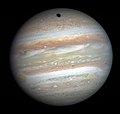 Jupiter
 -
 Saturne
 -
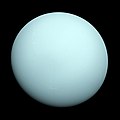 Uranus
 -
 Neptune

.jpg)


Notes
- ↑ 1.0 1.1 Burci, Gian Luca; Vignes, Claude-Henri (2004). World Health Organization. Kluwer Law International. Template:ISBN. Pages 15–20.
- ↑ Template:Cite journal Template:Open access
- ↑ Template:Cite journal
Liens externes
- Example link – un lien externe vers example.com
- [1] – un lien externe sans étiquette
[[Category:Documentation{{#translation:}}]] [[Category:VisualEditor{{#translation:}}]]